
What Is Radon Gas? Health Effects, Testing & Safe Levels
What is radon gas?
Radon is a naturally occurring radioactive gas that comes from the breakdown of uranium and radium found in rocks and soil. It is invisible, odorless and tasteless, so you cannot detect radon simply by looking at or smelling the air in your home.
Radon can move from the ground into homes and other buildings through openings in the foundation. Once inside, it can accumulate in the air and create a long-term health risk.
Any home can have elevated radon—including new or old homes, well-sealed or drafty homes, and homes with or without basements. The only way to know the radon level inside a particular home is to test it. US EPA
The primary health concern from long-term radon exposure is lung cancer. The EPA estimates that radon contributes to approximately 21,000 lung cancer deaths in the United States each year. US EPA
The important thing for homeowners to know is that radon can be measured and reduced.
Where Does It Come From?
Radon is produced through a natural radioactive decay process occurring in the earth.
For residential radon, the process can be simplified as:
Uranium-238 → Radium-226 → Radon-222
Uranium and radium occur naturally in rocks and soils. When radium decays, it can produce radon gas.
Unlike the solid elements that precede it in the decay chain, radon is a gas. That allows it to move through pores and openings in the soil and eventually enter buildings.
EPA describes radon as a naturally occurring radioactive gas produced by the decay of uranium and radium found in nearly all rocks and soils.

The decay series of uranium produces three well known isotopes, radon (222Rn), thoron (220Rn), and actinon (219Rn), all of which have a half-life of 3.82 days. The presence of radon in the environment has been identified as a significant health risk for mankind. It is one of the leading contributors to ionizing radiation. Radon gas is a dominant source of background radiation dose to the environment (55%) and its concentration varies greatly from place to place and even from season to season.
It decays products are electrostatic by its nature. They bound to monodispersed and polydispersed aerosols. We can expect that about 80% of decay products will be attached to the aerosols in the surrounding air, depending on the aerosol concentration in the environment, the electrostatic charge of the radon progeny, and the humidity of the environment. Humans are inhaling this substance; which emits a high level of radiation. It bombards the sensitive tissues in the lung and damages the DNA cells.
Can You See, Smell or Taste It?
No.
Radon is colorless and odorless. You cannot determine whether a home has elevated radon from its appearance, smell, age or condition. CDC
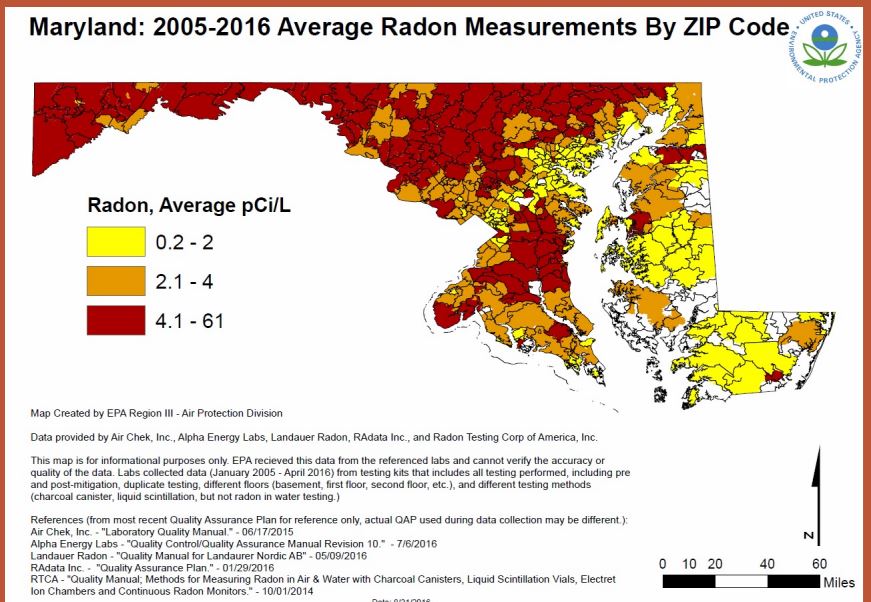
You also cannot determine your home’s actual radon level from a neighbor’s test result or a radon map.
Testing is the only way to know your home’s radon level. CDC
→ Learn about Radon Levels by ZIP Code and Radon Maps
Health Effects of Long-Term Exposure
The principal established health risk from radon exposure is lung cancer.
When radon decays, it produces radioactive particles. When inhaled, radon decay products can become trapped in the lungs. Over time, radiation from these particles can damage lung tissue and increase the risk of lung cancer. CDC
EPA estimates that radon is responsible for approximately 21,000 lung cancer deaths each year in the United States and identifies radon exposure as the second-leading cause of lung cancer after smoking. US EPA
People who smoke have an even greater lung-cancer risk when exposed to radon. CDC
Radon exposure is therefore different from hazards that cause an immediate reaction. The concern is primarily long-term exposure over time.
Are There Symptoms of Exposure?
People searching for radon poisoning symptoms or radon symptoms are often expecting radon exposure to cause an immediate illness similar to carbon monoxide poisoning.
That’s generally not how radon exposure works.
There are no immediate symptoms from radon exposure, according to EPA. The established health effect is lung cancer, which may develop years after exposure. US EPA
That means you should not rely on headaches, coughing, breathing problems or other physical symptoms to determine whether your home has radon.
A person can feel completely healthy while living in a home with an elevated radon level.
If lung cancer eventually develops, it can cause symptoms such as persistent coughing, chest pain, shortness of breath or coughing up blood—but those are not useful indicators of whether radon is currently present in a home.
The practical rule is much simpler:
Don’t wait for symptoms. Test the home
Understanding Safe Levels
There is no known completely safe level of radon exposure. The goal is to keep indoor radon concentrations as low as reasonably achievable. US EPA
In the United States, radon in air is generally measured in picocuries per liter (pCi/L).
EPA recommends taking action to reduce radon when the level is:
4.0 pCi/L or higher
EPA also recommends considering radon reduction when levels are between 2.0 and 4.0 pCi/L. US EPA
For context, EPA reports that the average indoor radon concentration in U.S. homes is approximately 1.3 pCi/L, while average outdoor air contains approximately 0.4 pCi/L. US EPA
| Radon result | General interpretation | Next step |
|---|---|---|
| Below 2 pCi/L | Lower concentration | Continue appropriate periodic testing |
| 2–3.9 pCi/L | Radon risk is still present | Consider reducing the level |
| 4 pCi/L or higher | EPA action level | Take action to reduce radon |

This table is intentionally simple because you already have a dedicated page for this subject.
→ See the Complete Radon Level Chart & What Your Test Result Means
Is It Common in My Area?
Radon has been found throughout the United States, and elevated levels have been found in every state. US EPA
Radon maps and local testing data can help homeowners understand regional radon potential, but they cannot predict the concentration inside an individual house.
Even neighboring homes can test differently.
If you’re trying to determine whether radon is common where you live, we’ve created a separate guide explaining how geographic radon information works:
→ Radon Levels by ZIP Code: Radon Maps & Local Risk
Your ZIP code can tell you something about the area.
A radon test tells you about your home.
How Home Testing Works
Because radon cannot be detected by your senses, a radon measurement is necessary to determine the concentration inside a home.
Testing can be performed using short-term devices, long-term devices or professional radon measurement equipment.
CDC says short-term tests generally measure radon for 2–90 days, while long-term tests measure for more than 90 days and provide a better indication of the home’s longer-term average. CDC
Professional testing can be particularly valuable when the result will affect an important decision, such as a real estate transaction.
Proper placement, test duration and building conditions matter because the objective is to obtain a measurement that accurately represents conditions in the property.
→ Learn More About Professional Radon Testing
Testing When Buying or Selling a Home
Radon testing is particularly important during a real estate transaction.
A buyer needs information about the specific property being purchased, not the neighborhood average or a neighbor’s previous radon test.
CDC recommends radon testing when preparing to buy or sell a home. CDC
For real estate testing, proper test conditions and device placement are important so that the result can be interpreted with confidence.
Alfa Air Agency provides professional continuous radon monitoring for homeowners, buyers, sellers and real estate professionals in Montgomery County, Maryland and Washington, DC.
→ Book a Professional Radon Test
When Else Should You Test?
In addition to real estate transactions, consider testing when:
- your home has never been tested;
- you don’t know the previous radon level;
- you’re planning major renovations;
- renovations or foundation work have recently been completed;
- you’re converting a basement or lower level into regularly occupied living space; or
- conditions in the home have changed significantly.
CDC specifically recommends testing before and after renovations and before lifestyle changes that result in someone spending more time on a lower level, such as converting a basement into a bedroom or home office. CDC
What Happens When a Test Is High?
Elevated radon levels can usually be reduced.
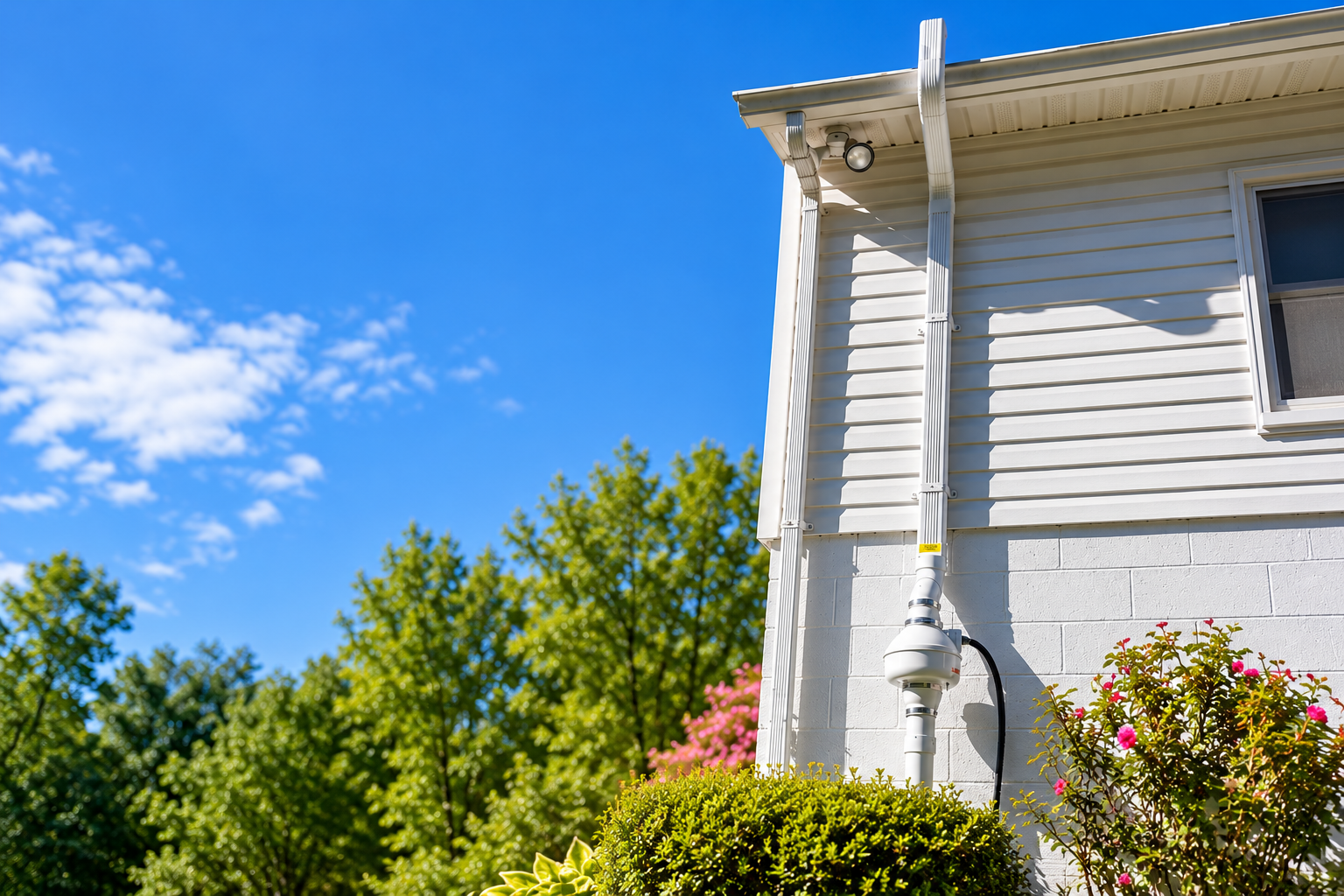
A common radon mitigation method is active soil depressurization. The system creates negative pressure beneath the foundation, collects radon-containing soil gas and directs it through piping to a discharge point outdoors.
The exact system design depends on factors such as:
- foundation construction;
- slab configuration;
- soil conditions;
- sump areas;
- crawl spaces;
- home layout; and
- the radon concentration measured in the property.
After a mitigation system is installed, the home should be tested again to verify that radon levels were reduced. CDC recommends retesting after radon-reduction work. CDC
→ Learn How Radon Mitigation Works
→ See How Much a Radon Mitigation System Costs
Frequently Asked Questions
What is radon gas?
Radon is a naturally occurring radioactive gas produced through the decay of uranium and radium found in rocks and soil. It is invisible and odorless and can accumulate inside homes and other buildings. US EPA
Where does radon come from?
Residential radon primarily originates from naturally occurring radioactive materials in rock and soil beneath and around a building.
How does radon enter a house?
Radon can enter through foundation cracks, construction joints, sump openings, gaps around utility penetrations, wall cavities, crawl spaces and other openings connecting a building to the ground. CDC
What does radon smell like?
Radon has no smell. It also cannot be seen, making testing necessary to determine the concentration inside a home.
What are the symptoms of radon exposure?
Radon exposure does not normally cause immediate symptoms. Long-term exposure increases the risk of lung cancer. US EPA
Can you get radon poisoning?
“Radon poisoning” is commonly used to describe harmful radon exposure, but radon does not normally cause sudden poisoning symptoms. The established health concern is increased lung-cancer risk from long-term exposure.
What radon level is dangerous?
There is no known completely safe level of radon exposure. EPA recommends fixing homes at 4 pCi/L or higher and considering action between 2 and 4 pCi/L. US EPA
Can a home without a basement have radon?
Yes. EPA says elevated radon can occur in homes with or without basements, as well as in new and old homes. US EPA
Can I determine my home’s radon level from my ZIP code?
No. Geographic information can indicate regional radon potential, but only a test performed at the property can determine its radon concentration.
→ See Radon Levels by ZIP Code
Can high radon levels be fixed?
Yes. Radon-reduction systems can reduce elevated indoor radon concentrations. The property should be retested after mitigation to verify the result. CDC
Protect Your Home by Testing for Radon
Radon is invisible.
It has no smell.
And you cannot determine your home’s radon level from its age, appearance, neighborhood or ZIP code.
Testing is the only way to know whether radon levels are elevated in your home. CDC
Alfa Air Agency provides professional radon testing and mitigation services for homeowners, buyers, sellers and real estate professionals throughout Montgomery County, Maryland and Washington, DC.